

The online education market is growing faster than ever. Coaches, educators, institutes, and businesses are all looking to monetize knowledge through digital courses. One of the most important decisions in this journey is choosing how to deliver and sell those courses.
Should you build your own LMS website, or should you sell courses through a course marketplace?
Both models work—but they serve very different goals. In this detailed, SEO-focused guide, we’ll clearly explain what an LMS website is, what a course marketplace is, and the pros and cons of each, so you can choose the right option for your business.
What Is an LMS Website?
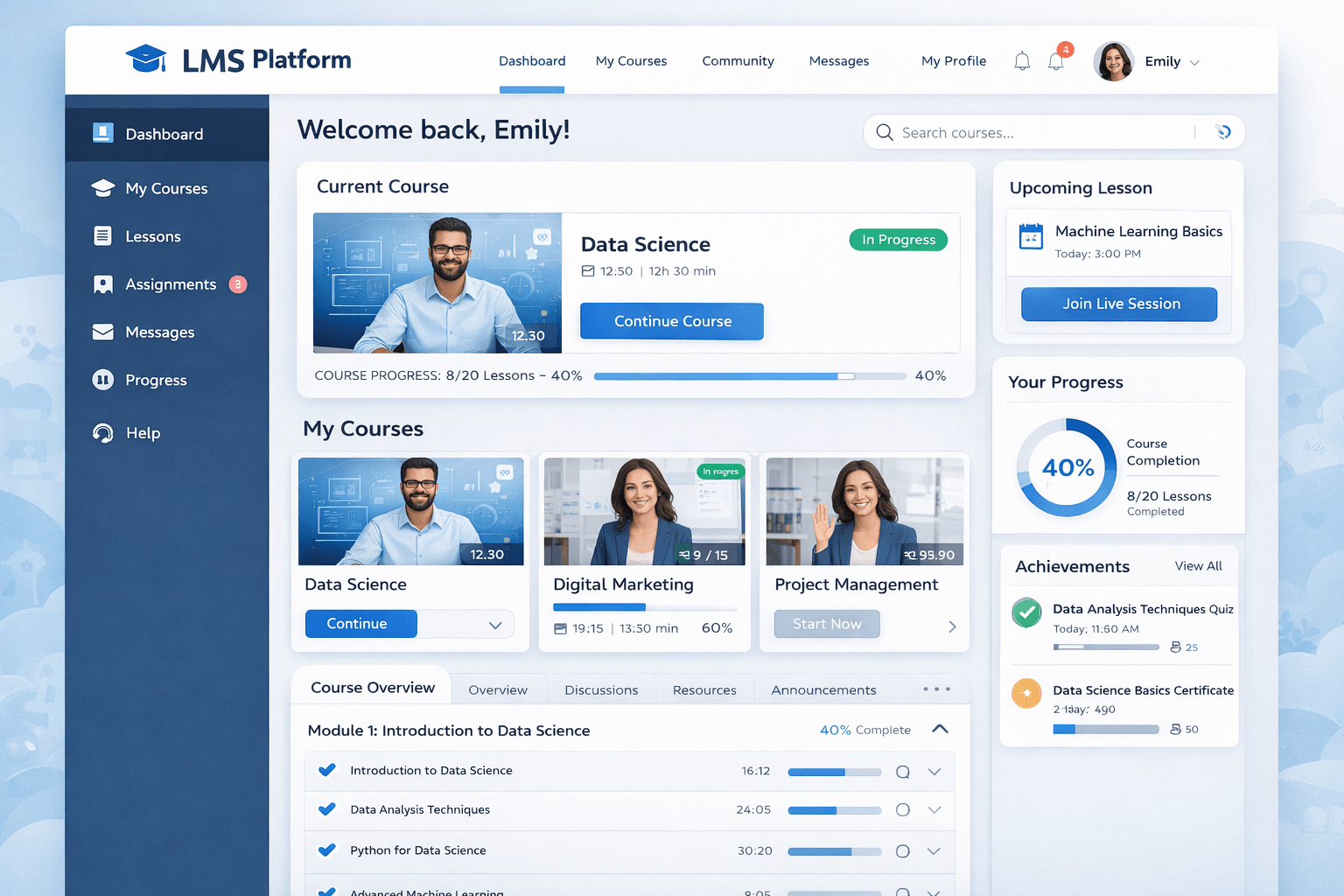
An LMS (Learning Management System) website is a fully owned online learning platform where you create, manage, sell, and deliver courses under your own brand.
With an LMS website, everything—from design and user experience to pricing and student data—is controlled by you. Students visit your website, enroll in your courses, and interact with your brand throughout their learning journey.
Key Features of an LMS Website
- Custom-branded website and course interface
- Student registration and login system
- Course modules, lessons, and quizzes
- Progress tracking and completion status
- Certificates and assessments
- Flexible pricing (one-time, subscription, bundles)
- Full access to student data and analytics
An LMS website is ideal for building a long-term education business rather than just selling individual courses.
What Is a Course Marketplace?

A course marketplace is a third-party platform where multiple instructors list and sell their courses to a shared audience.
Instead of building your own website, you upload your course content to the marketplace, and the platform handles hosting, payments, and basic marketing. Students discover your course while browsing the marketplace alongside thousands of others.
Key Characteristics of a Course Marketplace
- Pre-built platform and audience
- Easy course upload and publishing
- Platform-managed payments and access
- Limited branding and customization
- Revenue shared with the platform
Course marketplaces focus on volume and exposure, not brand ownership.
LMS Website vs Course Marketplace: Core Differences
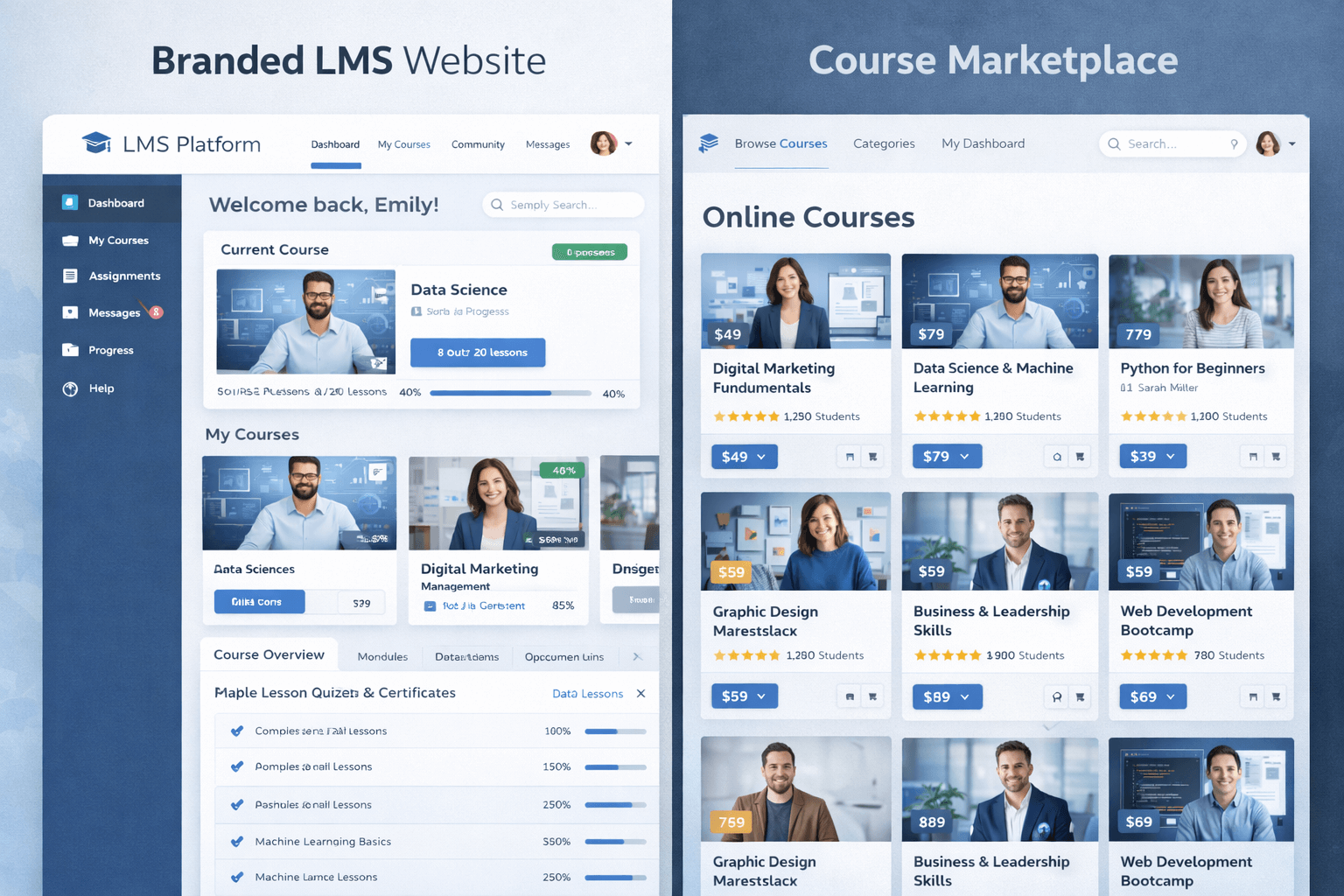
| Aspect | LMS Website | Course Marketplace |
| Brand Identity | Fully yours | Platform-focused |
| Student Ownership | Complete access | Limited or none |
| Pricing Control | Full flexibility | Restricted |
| Custom Features | Fully customizable | Fixed structure |
| Marketing | Your strategy | Platform-driven |
| Scalability | High | Limited |
Pros and Cons of an LMS Website
Advantages of an LMS Website
1. Full Brand Control
Your website reflects your identity, messaging, and teaching style. Students remember you, not the platform.
2. Higher Revenue Retention
You keep 100% of course revenue without sharing commissions.
3. Flexible Monetization Models
Sell single courses, bundles, memberships, or subscriptions—whatever fits your business model.
4. Direct Student Relationship
You own student emails, learning data, and engagement metrics, allowing better retention and upselling.
5. Long-Term Scalability
An LMS website grows with your business—new courses, communities, certifications, and corporate training programs can be added anytime.
Disadvantages of an LMS Website
- Higher initial setup cost
- Requires marketing and traffic generation
- Needs ongoing maintenance and updates
Despite these challenges, an LMS website is the best option for creators focused on long-term growth and brand value.
Pros and Cons of a Course Marketplace
Advantages of a Course Marketplace
1. Quick Start
You can publish a course quickly without building a website.
2. Built-In Audience
Marketplaces already have traffic, which can help beginners get early sales.
3. Minimal Technical Work
No hosting, security, or maintenance responsibilities.
Disadvantages of a Course Marketplace
1. Limited Brand Visibility
Students remember the platform, not the instructor.
2. High Revenue Sharing
A percentage of every sale goes to the marketplace.
3. No Student Ownership
You don’t fully own student data or relationships.
4. Pricing Restrictions
Discounts and pricing are often controlled by the platform.
5. Growth Limitations
Scaling beyond basic course sales is difficult.
Marketplaces are best for testing course ideas, not building a standalone education brand.
Cost & Long-Term Value Comparison

LMS Website
- Higher upfront investment
- Lower long-term costs
- Greater lifetime value per student
Course Marketplace
- Low entry cost
- Ongoing revenue sharing
- Limited long-term profitability
An LMS website is an investment, while a course marketplace is a short-term distribution channel.
SEO, Marketing & Growth Potential
- An LMS website allows full SEO optimization, content marketing, email automation, and remarketing.
- A course marketplace controls traffic and limits your ability to build organic visibility.
If organic growth, authority building, and repeat sales matter to you, an LMS website is the stronger choice.
Final Verdict: Which Should You Choose?
Choose an LMS Website if:
- You want to build a long-term education brand
- You need full control over pricing and content
- You want to scale beyond single-course sales
- You value student ownership and data
Choose a Course Marketplace if:
- You’re just starting out
- You want quick exposure
- You don’t want technical responsibility
💡Best approach: Many creators start with a marketplace to validate demand, then move to an LMS website to gain control, profitability, and brand authority.
Build Your LMS Website with Experts
If you’re ready to create a custom LMS website that reflects your brand, supports growth, and delivers a seamless learning experience, our LMS Website Development Services can help you plan, design, and launch the right solution.
